Introduction: The key significance of material selection
With the rapid development of 3D printing technology today, materials, as the core element of additive manufacturing, directly determine the performance and application scope of printed parts. The topic of dimensional stability optimization of engineering-grade ABS materials in FDM printing involves many aspects such as material science, process optimization and engineering applications, and is worthy of in-depth discussion.
For professional 3D printing service providers, an in-depth understanding of material properties is not only a reflection of technical capabilities, but also the basis for providing customers with high-quality solutions. lantu3D has accumulated rich experience in material research and development and application, and can provide accurate material selection suggestions for different project needs.
Technical principles of material properties
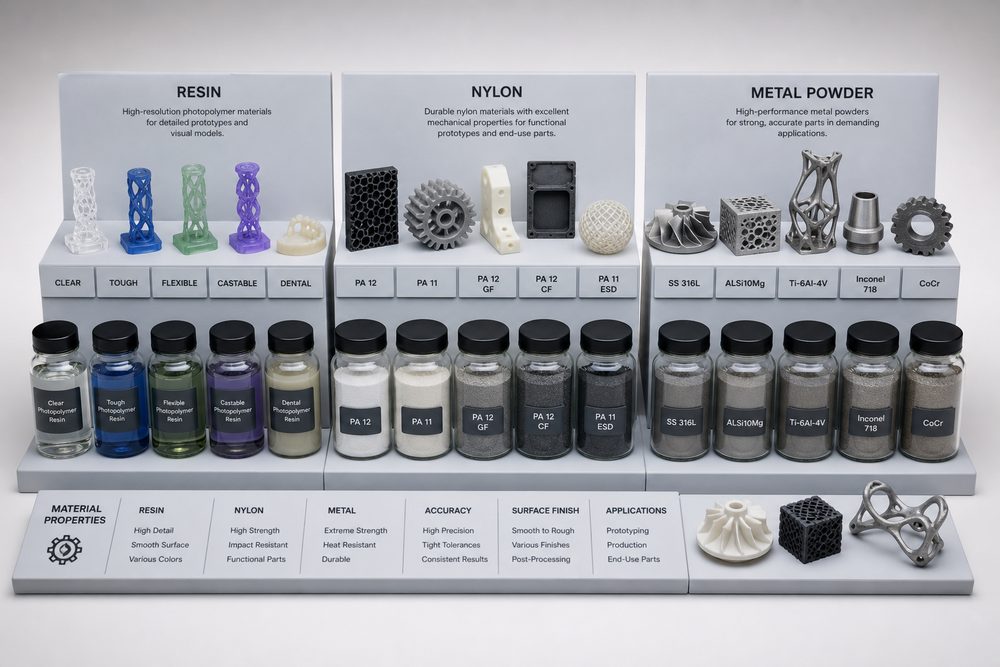
ABS material is the focus of research, and its technical principles involve multiple dimensions such as molecular structure, physical properties and process adaptation. In practical applications, the material's thermal stability, mechanical strength and chemical resistance are key considerations.
From a microscopic level, the molecular arrangement and cross-linking density of the material directly affect its performance in FDM printing. Understanding these basic principles can help engineers make more reasonable decisions during the design and process planning stages.
Optimization strategy of process parameters
In the FDM printing process, the setting of process parameters has a significant impact on the quality of the final product. Parameters such as temperature control, print speed and layer thickness selection need to be finely tuned based on material properties.
Professional process optimization requires comprehensive consideration of equipment capabilities, material batch differences and environmental factors. Through a systematic parameter debugging process, the best balance point of material performance can be found to achieve stable and reliable printing effects.
Application scenarios and case analysis
ABS materials have successful application cases in many industries. From industrial manufacturing to medical health, from aerospace to consumer electronics, advances in material technology are expanding the application boundaries of 3D printing.
Take an actual project as an example. A customer needs to develop high-temperature-resistant functional test pieces. After material screening and process verification, a suitable engineering material solution is finally selected. Cases like this illustrate the value of materials expertise in real-world projects.
Quality assurance and testing standards
In order to ensure the consistency and reliability of dimensional stability, a complete quality testing system needs to be established. From material warehousing inspection to finished product performance testing, every link needs to be strictly controlled.
Commonly used inspection methods include dimensional measurement, mechanical property testing and surface quality assessment. Through standardized testing processes, we can provide customers with quality traceable product delivery.
Summary and Outlook
The research and practice of dimensional stability optimization of engineering-grade ABS materials in FDM printing reflects the trend of 3D printing technology developing towards specialization and refinement. With the continuous advancement of materials science, more high-performance materials will be used in the field of additive manufacturing in the future.
lantu3D will continue to focus on material technology innovation and provide customers with more professional and comprehensive 3D printing solutions. Customers with relevant needs are welcome to contact us to discuss the best solution for material selection and process optimization.
Submit a model, drawing, image or written notes. Engineers will review material, process, finishing and delivery based on actual use.